Everton’s matchday income at the Hill Dickinson Stadium is forecast to more than double the previous benchmark set at Goodison Park, but the club will still hike ticket prices again next season.
After their final match of 2025-26 at the Hill Dickinson Stadium, the meeting with Sunderland in 10 days’ time, Everton will have played 21 times at their new home.
The building cost around £800m and, like West Ham and Tottenham’s stadium moves before it, was pitched to Everton fans as the revenue panacea that would help the Toffees compete with the biggest and the best in the transfer and wage markets.
With the club still recalibrating its finances under The Friedkin Group after years of onerous debts, sky-high recruitment and retention costs, and a commercial operation in desperate need of some TLC under, it will take time for the new owners to realise the stadium’s full financial potential in the post-Moshiri era.
Has the Hill Dickinson Stadium brought new problems for Everton fans? 😬
Season ticket prices are expected to rise for next season 💰

Documents seen by Everton News show that the previous regime were modelling for baseline matchday income of just under £44m this season, compared to just £20m at Goodison Park. On top of that, the club will benefit from the Hill Dickinson naming rights link-up, the stadium’s Founder Partners, and a retail boom in the weeks and months after the ribbon-cutting ceremony.
But not all of that £44m is ‘profit’. Interest costs are likely to be around £25m annually, while there are other significant expenses associated with running an enormous, 365-days-a-year venue that will also eat into that margin.
The club, therefore, has decided to ignore requests from its Fan Advisory Board for a three-year freeze and instead raise ticket prices in 2026-27, with fans expected to stump between an extra three and 10 per cent next term. That is predicted to raise about £1.5m through the turnstiles.
That will likely take Everton roughly level with Newcastle United and West Ham as the biggest matchday income generators outside the so-called Big Six. But unlike Newcastle, Everton did not play in the Champions League season, and they A) have a smaller capacity than West Ham and B) don’t have the London premium.
For context, that £1.5m figure is roughly what Everton spent in legal fees last season, a seventh of what they paid agents in 2025-26, and it is less than one per cent of their total annual wage bill.

Everton are by no means the first nor will they be the last to hike ticket prices, especially in an era when utility costs and administrative expenses are soaring across the Premier League. But in a climate where supporters are rightly suspicious of nakedly commercial moves, did The Friedkin Group really need to take this step for such a modest increase in matchday income?
“If I was a fan who had been uprooted from my seat at Goodison and had to start paying slightly higher prices, I’d be concerned,” says University of Liverpool football finance academic Kieran Maguire, speaking exclusively to Everton News.
“It is the compound effect of price increases that is worrying.”
By way of an example, Everton say their cheapest season tickets next term are £640. A five per cent increase – which would be above inflation – would make that ticket just £32 more expensive next term, but the same increase compounded over five seasons means it would then cost almost £860.
“Everton are a local football club and one which is a standard bearer for the city,” says Maguire.
“Liverpool is not a wealthy city – it’s a city that has wealth, but there are sections of the fanbase for whom a small increase can have a big impact. I’ve had connections with the Everton Foodbank. The work that they do makes you proud to be a resident of the city, but it is also indicative of the challenges that many people face.
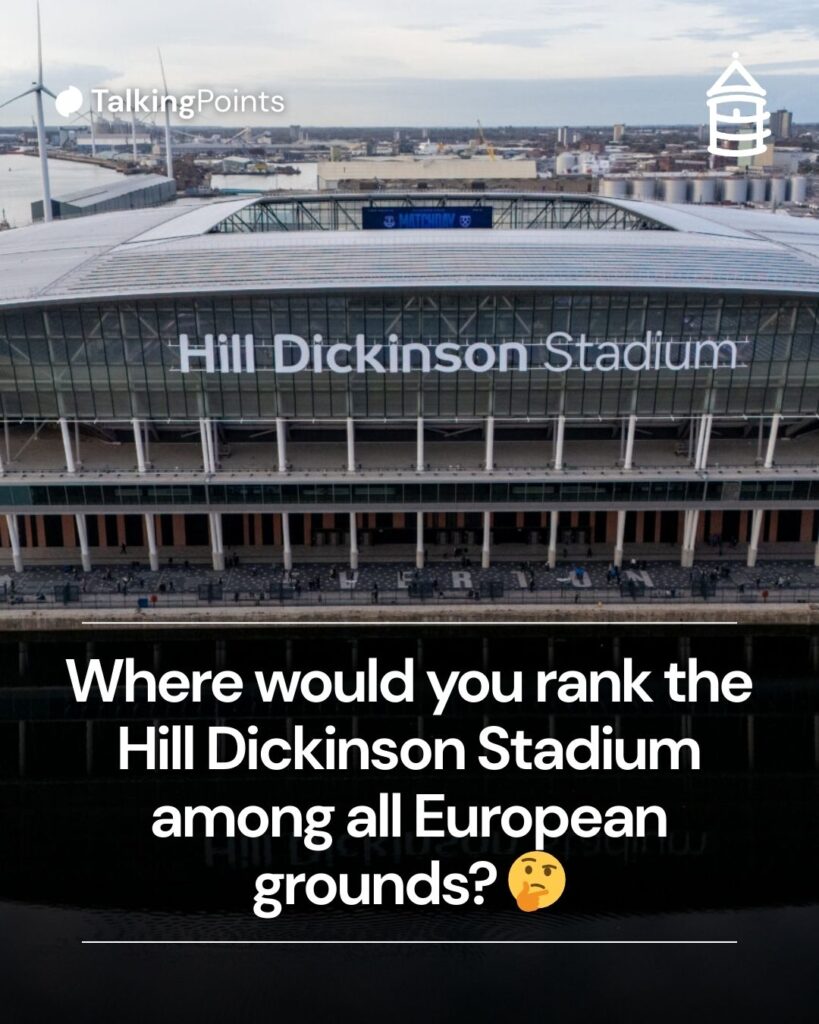
Be honest… which grounds do you think are up there with Everton’s? 🤩
“A successful first season at Hill Dickinson has given the club the ability to squeeze a few fans out and replace them with supporters with more wealth. That is the strategy at a lot of clubs. That doesn’t have to be the way, and I hope it doesn’t end up being the way at Everton. Plenty of clubs have frozen ticket prices.
“If it raises £1.5m, that’s the difference between finishing, say, 9th compared to 10th. So, I think there’s an element of short-termism from the club here because it’s the fans who provide the passion and enthusiasm rather than the billionaire owner who is being asked to make the sacrifice. That does appear to be something of a paradox.
“They were generating less than £1m per match at Goodison, so they did have to make up a significant shortfall with the move to the new stadium, but the transition has to be managed carefully.”
Receive a digest of our best Everton content each week direct to your mailbox